

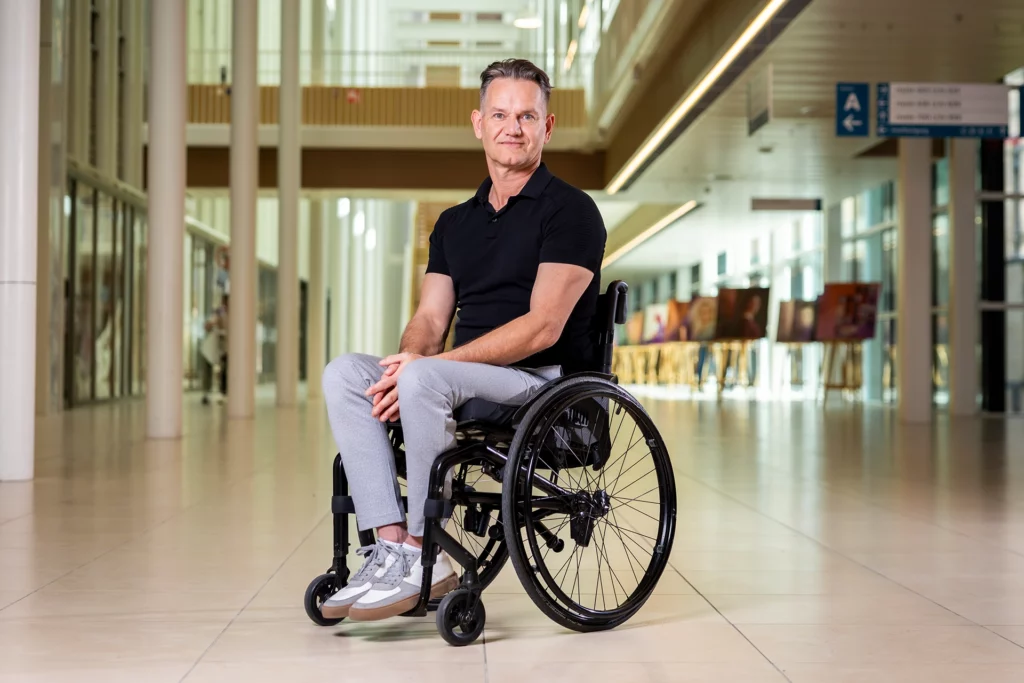
How can a small foundation build international support for research into a rare and underfunded disease? In this interview, Life4HSP Foundation shares how it is mobilising donors, researchers and partners across borders to accelerate progress on Hereditary Spastic Paraplegia, offering useful insights on fundraising for complex and overlooked causes.
What are your organisation’s core mission and values? What inspired its creation?
The core mission of the Life4HSP Foundation is to accelerate scientific research into Hereditary Spastic Paraplegia (HSP) to improve diagnostics and treatment options, with the ultimate goal of delaying or halting neurodegeneration. Our values are rooted in transparency, collaboration, and relentless dedication to the patient community. The inspiration for Life4HSP is deeply personal: I founded the organisation after my nephew was diagnosed with this condition. Witnessing the reality of an incurable, rare neurodegenerative disorder firsthand made me realise the urgent need for action. HSP affects over 1,000 people in the Netherlands and up to 800,000 worldwide. Yet, as a rare disease, it receives far too little of the critical research funding needed to find a cure.
What challenges and issues does your organisation aim to address? Why are they important?
HSP causes progressive stiffness, spasticity, and weakness in the legs, meaning many patients eventually require a wheelchair. In complex forms, it also leads to coordination issues, cognitive decline, and vision or hearing loss. We aim to address the severe lack of curative treatments; currently, only symptom relief is available. This is crucial because HSP gradually deprives individuals of their mobility and independence, deeply affecting the quality of life for patients and their families. Elevating awareness and funding is the only way to drive the breakthroughs necessary to change this reality.
Can you share an example of your impact on the ground?
In our first year alone, we successfully raised €200,000. This incredible milestone has allowed us to directly support and fund cutting-edge research at some of the world’s leading institutions, including Radboudumc, the Paris Brain Institute, and Boston Children’s Hospital. By funding these targeted research initiatives into HSP mutations, we are actively moving therapies from a theoretical possibility to something tangible for patients globally.
Looking back, what key milestones or achievements are you most proud of?
I am incredibly proud of our successful official launch and achieving our designated public benefit organisation (ANBI) status, which assures our donors that their contributions are handled with maximum integrity. However, our most significant milestone is that we have already been able to launch vital research and projects that will directly benefit patients. Moving from an idea to actively funding science that can change lives—all guided by a dedicated, unremunerated board of experts—is an achievement that drives us forward every day.
What are the main programmes, projects, or initiatives you are currently developing?
On a practical level, we are focused on bridging the gap between the laboratory and the clinic. We are actively funding specific DNA and clinical research projects investigating the genetic variants of HSP. Crucially, we are working diligently towards initiating clinical trials on patients. Every project we develop, and every community fundraising event we organise, is geared towards getting these treatments tested and approved for the people who need them most.
How can individual donors support your work and get involved in your initiatives?
There are numerous ways to get involved. Individuals and donors can make direct financial contributions, start their own fundraising campaigns, or organise events on our behalf. People can also choose to become a ‘friend of Life4HSP‘, committing to regular support. For partner organisations and corporate sponsors, we offer opportunities to collaborate directly on funding vital scientific research and spreading awareness globally. Every contribution directly accelerates our pursuit of a cure.
What role does Giving Europe play for your organisation? How does cross-border giving strengthen your mission?
Because HSP is a rare disease with immense genetic diversity, finding a cure requires pooling knowledge, resources, and expertise on an international scale. Giving Europe plays a pivotal role by facilitating seamless cross-border giving. It empowers international donors to support our Dutch-based foundation without administrative barriers. This borderless approach is essential for rare diseases like HSP: it expands our funding base exponentially and strengthens our mission by fostering the European and global collaboration necessary for scientific breakthroughs.
What are your priorities for the coming years?
Our primary focus for the coming years is to massively expand our funding pipeline to ensure continuous and robust support for European clinical trials and genetic research. We aim to identify and fund projects specifically targeted at delaying neurodegeneration in HSP mutations. Additionally, we will prioritise international advocacy to ensure HSP remains on the global health agenda, fostering cross-border research collaborations that will finally bring effective treatments to patients worldwide.

The simple, safe, tax-efficient way to give across European borders
Copyright © 2026 - Giving EuropeSubscribe to Give Further, our quarterly newsletter.
Giving Europe is hosted by
